
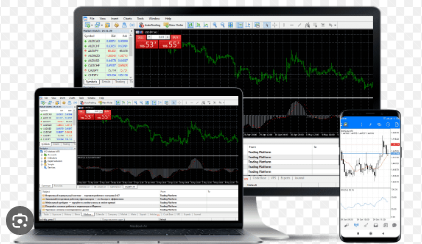
Recent market analysis shows a significant shift in mobile trading adoption across the financial sector. Over 70% of retail market participants now execute their daily transactions via mobile devices, relying heavily on software responsiveness. When selecting a forex trading app android , users consistently prioritize stability and feature-rich environments over basic interfaces. The data highlights a growing demand for sophisticated mobile platforms that integrate seamless execution with advanced risk control mechanisms, allowing users to maintain strict portfolio management while on the move.
Why are risk management tools critical for mobile traders?
Statistical models indicate that traders utilizing strict stop-loss and take-profit features reduce their portfolio volatility by nearly 40%. Advanced mobile platforms now offer automated trailing stops and precise margin calculators directly on smartphones. This capability allows users to manage their market exposure dynamically. Ensuring that strict risk parameters remain active even when individuals are away from their desktop workstations is a primary factor in maintaining consistent performance over quarterly trading cycles.
What trading tools dominate the mobile landscape?
Analytics reveal that 65% of mobile trades rely heavily on real-time charting and integrated technical indicators. Mobile platforms have rapidly evolved to include custom indicators, Fibonacci retracements, and multiple time-frame analysis. These integrated tools empower individuals to perform deep technical evaluations directly on their smartphone screens. By closing the analytical gap between mobile software and traditional desktop environments, users can make highly informed decisions based on comprehensive historical data sets and real-time price action.
How does latency impact mobile trade execution?
Millisecond delays can significantly alter the outcome of a financial transaction. Performance metrics demonstrate that premium trading applications maintain server execution speeds well under 50 milliseconds. Fast execution effectively minimizes slippage during highly volatile market sessions, such as major economic data releases. This technological efficiency ensures that traders receive the precise entry and exit prices they calculate, protecting their projected profit margins from unexpected price gaps.
What role does interface design play in user retention?
Usability studies confirm that intuitive navigation increases active daily platform usage by 55%. A streamlined user interface prevents costly manual execution errors, especially when entering complex orders like one-cancels-the-other (OCO). Customization options, such as customizable one-tap trading screens and personalized asset watchlists, contribute heavily to a trader’s ability to react swiftly to breaking economic data without navigating through cumbersome menus.
Advancing Your Mobile Trading Strategy
The trajectory of mobile software development clearly points toward increasingly sophisticated applications. By leveraging platforms equipped with professional-grade analysis features and strict risk controls, traders can maintain a disciplined approach anywhere they go. Evaluating an application based on its analytical depth, server execution speed, and interface reliability remains the most effective strategy for serious, long-term market participation.