
Maximizing Success with Advanced Risk Management Tools


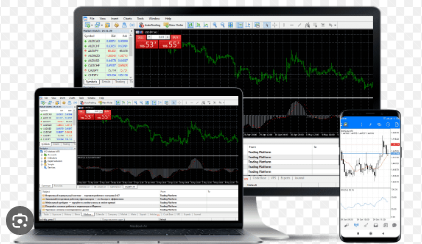
Recent market analysis shows a significant shift in mobile trading adoption across the financial sector. Over 70% of retail market participants now execute their daily transactions via mobile devices, relying heavily on software responsiveness. When selecting a forex trading app android , users consistently prioritize stability and feature-rich environments over basic interfaces. The data highlights a growing demand for sophisticated mobile platforms that integrate seamless execution with advanced risk control mechanisms, allowing users to maintain strict portfolio management while on the move.

Why are risk management tools critical for mobile traders?

Statistical models indicate that traders utilizing strict stop-loss and take-profit features reduce their portfolio volatility by nearly 40%. Advanced mobile platforms now offer automated trailing stops and precise margin calculators directly on smartphones. This capability allows users to manage their market exposure dynamically. Ensuring that strict risk parameters remain active even when individuals are away from their desktop workstations is a primary factor in maintaining consistent performance over quarterly trading cycles.

What trading tools dominate the mobile landscape?

Analytics reveal that 65% of mobile trades rely heavily on real-time charting and integrated technical indicators. Mobile platforms have rapidly evolved to include custom indicators, Fibonacci retracements, and multiple time-frame analysis. These integrated tools empower individuals to perform deep technical evaluations directly on their smartphone screens. By closing the analytical gap between mobile software and traditional desktop environments, users can make highly informed decisions based on comprehensive historical data sets and real-time price action.

How does latency impact mobile trade execution?

Millisecond delays can significantly alter the outcome of a financial transaction. Performance metrics demonstrate that premium trading applications maintain server execution speeds well under 50 milliseconds. Fast execution effectively minimizes slippage during highly volatile market sessions, such as major economic data releases. This technological efficiency ensures that traders receive the precise entry and exit prices they calculate, protecting their projected profit margins from unexpected price gaps.

What role does interface design play in user retention?

Usability studies confirm that intuitive navigation increases active daily platform usage by 55%. A streamlined user interface prevents costly manual execution errors, especially when entering complex orders like one-cancels-the-other (OCO). Customization options, such as customizable one-tap trading screens and personalized asset watchlists, contribute heavily to a trader’s ability to react swiftly to breaking economic data without navigating through cumbersome menus.

Advancing Your Mobile Trading Strategy

The trajectory of mobile software development clearly points toward increasingly sophisticated applications. By leveraging platforms equipped with professional-grade analysis features and strict risk controls, traders can maintain a disciplined approach anywhere they go. Evaluating an application based on its analytical depth, server execution speed, and interface reliability remains the most effective strategy for serious, long-term market participation.

MT4 Trading Platform Performance Optimization Tips

How can I improve the speed of my MT4 platform?
Performance issues on MT4 often arise from system resource constraints and heavy data loads. Traders who optimize their charts by limiting the number of indicators and timeframes running simultaneously report a 30–50% reduction in platform lag. Regularly clearing historical data and unused templates also minimizes memory consumption, ensuring smoother execution of mt4 trading platform.

Does internet connectivity significantly impact MT4 performance?
Yes. Statistics show that a stable connection with latency below 50 milliseconds can reduce slippage by up to 20% during high-volatility periods. Using wired connections rather than Wi-Fi, and choosing brokers with servers closer to your location, can dramatically improve execution speed and reduce disconnections.

Are there best practices for managing indicators and Expert Advisors (EAs)?
Running multiple EAs and complex indicators can slow down the platform. Analysis of trading performance suggests that keeping the number of active scripts under five per chart can maintain optimal performance. Additionally, scheduling intensive operations during off-market hours prevents unnecessary load during peak trading times.

How does computer hardware affect MT4 efficiency?
MT4 performance is heavily influenced by CPU and RAM. Research indicates that platforms running on systems with at least 8GB of RAM and multi-core processors demonstrate 40% faster backtesting speeds. Traders using SSDs instead of HDDs also notice significantly quicker chart loading times and order execution.

Is platform version an important factor?
Using the latest stable version of MT4 ensures compatibility with current operating systems and reduces bugs that may impair speed. Surveys among professional traders show that platforms updated regularly experience 25% fewer crashes and errors during peak trading sessions.

Can optimization of chart settings make a difference?
Yes. Reducing the number of visible bars and disabling unnecessary visual effects improves chart rendering time. Statistical comparisons reveal that traders who limit the chart history to essential bars achieve faster response times, with some reporting up to a 35% improvement in navigation speed.

Are there additional tips for maintaining consistent performance?
Regularly restarting MT4 and clearing the cache prevents memory leaks that accumulate over prolonged usage. Keeping the operating system and antivirus software updated, and avoiding simultaneous heavy applications, also contributes to smoother trading experiences.

What about data management?
Efficient management of historical data is critical. Periodically archiving older data while keeping only active trading history on the platform prevents slowdowns. Analysis suggests that traders who perform monthly data maintenance notice a measurable improvement in loading charts and executing strategies.

Conclusion
Optimizing MT4 performance is a combination of smart platform management, efficient system resources, and strategic use of trading tools. By addressing indicators, hardware, connectivity, and regular maintenance, traders can ensure reliable execution, faster data processing, and a smoother overall trading experience.

Prop Trading Strategies Every Trader Should Learn

The world of prop trading offers traders a unique opportunity to access substantial capital and trade in a highly professional environment. However, success in this field depends heavily on the strategies a trader uses. Proprietary trading requires a disciplined, analytical approach, and learning proven strategies is crucial for building consistency and long-term performance. Whether you are a beginner or an experienced trader, understanding these core strategies can significantly enhance your trading effectiveness.

One of the most widely used strategies in prop trading is trend following. This approach focuses on identifying market momentum and trading in the direction of the prevailing trend. Traders use indicators such as moving averages, breakout levels, and trendlines to determine strong directional movement. Trend following is particularly useful in markets that experience clear patterns, and it helps traders avoid countertrend positions that may carry higher risks.

Scalping is another popular prop trading strategy, especially for traders who thrive in fast-paced environments. Scalping involves executing numerous small trades throughout the day to capture minor price movements. While this strategy demands precision, speed, and emotional control, it can be highly effective when paired with strict risk management. Many prop traders appreciate scalping for its ability to generate steady intraday profits.

Mean reversion is a favored technique for markets that frequently return to an average price level after sharp movements. Traders using this strategy identify overbought or oversold conditions and anticipate price corrections. Tools such as RSI, Bollinger Bands, and statistical analysis help determine potential reversal points. This strategy is especially useful for traders who excel at analyzing short-term price deviations.

Breakout trading also remains a foundational strategy in prop environments. Breakouts occur when the price moves above resistance or below support levels. Traders look for strong volume and momentum to confirm these moves and capitalize on the ensuing volatility. Breakouts can offer significant profit potential, especially during major market events or high liquidity sessions.

Risk management, although not a strategy in itself, plays a vital role in executing all trading approaches effectively. Successful prop traders apply structured position sizing, clear stop-loss rules, and predefined profit targets to maintain discipline. Without proper risk management, even the most effective strategy can result in losses.

In conclusion, mastering strategies such as trend following, scalping, mean reversion, and breakout trading can greatly enhance a trader’s performance in the prop trading environment. When combined with strong discipline and proper risk management, these techniques form the foundation of a successful trading career.

Leveraging T4Trade’s Educational Resources to Enhance Your CFD Trading Skills

Contracts for Difference (CFDs) are gaining traction as a popular tool for Trading global financial markets. However, Trading CFDs requires a solid understanding of market dynamics, risk management, and strategic decision-making. Platforms like t4trade cfd trading are transforming the way traders approach CFD Trading , offering a suite of educational resources tailored for both beginners and experienced traders.

The Importance of Education in CFD Trading

Statistically, a significant number of traders struggle in the financial markets due to a lack of education and preparedness. A report by the European Securities and Markets Authority (ESMA) revealed that over 74%-89% of retail CFD accounts lose money. This underscores the necessity of equipping oneself with the right knowledge and tools to approach the markets effectively.

With CFDs, traders can speculate on price movements without owning the underlying asset, but the leverage involved amplifies both potential gains and losses. To succeed, traders must not only understand market trends but also have a robust risk management strategy. T4Trade addresses these challenges by offering curated educational content that simplifies complex Trading concepts.

What T4Trade’s Educational Resources Offer

T4Trade sets itself apart by combining accessibility with depth. Their educational section covers a wide array of topics, catering to traders at various skill levels.

1.Webinars and Interactive Sessions

T4Trade provides live webinars hosted by experts who discuss trending market topics, Trading strategies, and economic events. This dynamic form of learning ensures traders can apply real-time insights to their Trading .

2.Detailed Articles and Guides

From beginner’s guides on navigating CFD platforms to advanced tutorials on technical and fundamental analysis, T4Trade’s resources are designed to build competence step by step. For instance, they explain the impact of geopolitical events on CFD Trading with actionable examples.

3.Economic Calendar Integration

An economic calendar is critical for traders to anticipate market volatility triggered by global events. T4Trade’s resources include detailed walkthroughs on how to use economic indicators to inform Trading strategies.

4.Risk Management Resources

Risk management remains one of the most critical components of successful Trading . Through structured lessons and articles, T4Trade educates traders on setting stop-loss orders, limit orders, and managing leverage efficiently.

The Growing Demand for Skill-Based Learning

Trading is a constantly evolving field. A study by Statista in 2023 highlighted a 22% year-over-year increase in demand for structured learning in financial Trading globally. T4Trade’s emphasis on informed Trading aligns with this trend, ensuring its users are better prepared to face the challenges and opportunities that CFD Trading presents.

By leveraging these educational resources, traders gain a competitive edge and the confidence needed to tackle volatile markets efficiently. For anyone aiming to improve their CFD Trading skills, T4Trade’s platform offers more than just tools—it provides a foundation for long-term growth and success.